

1. Effect on the neck - the Neck Ring
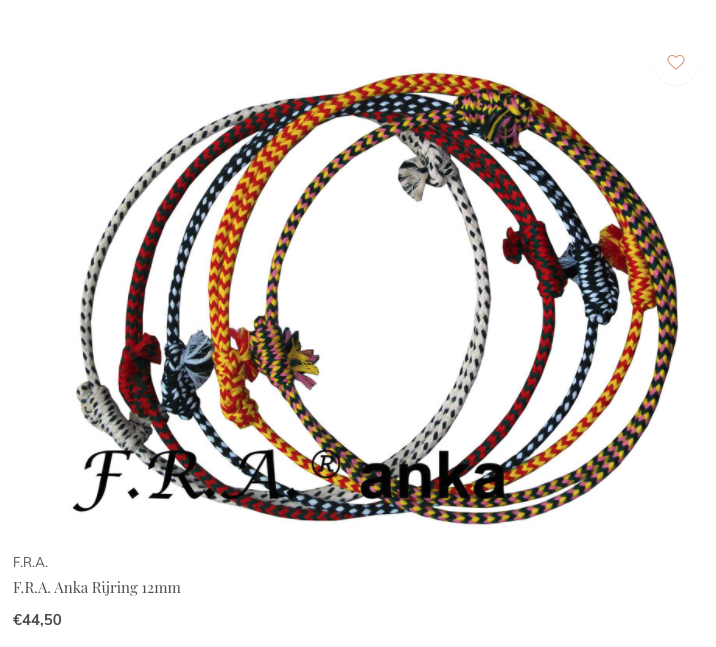
The bitless bridle with the least impact on the horse's head is the neck ring or riding ring. This bridle requires proper preparation and training from both horse and rider: only once your horse is sufficiently comfortable responding to seat, leg, and weight aids can you use the riding ring as additional support to smoothly ride your horse bitless, without needing a bridle or halter.
With us you will find different types of riding rings: the FRA Anka riding ring is a basic neck ring, made of cord with a metal core. It is adjustable in length and fits every horse, available in 12mm or 14mm thickness. If you prefer a more luxurious version, you can opt for the FRA Kripton Riding ring, made of a steel core covered with leather braid. Some riders prefer to ride with a flexible balance rein or riding ring, such as the FRA Cinty or Chiron riding ring in leather version, or even a Parelli Savvy String that you can knot as a neckrope.
If you want to know how to learn to ride on a neckrope or neckring, be sure to check out Parelli Natural Horsemanship or book a lesson at a certified instructor !
Related products




2. Effect on the nose – the Bosal
This system has been used traditionally by Native Americans: direct pressure on the nose signals the horse where to move. A sturdy noseband around the nose—originally made of braided cowhide and smoothed at the nose—and neck reining, or steering with the reins against the neck, signals the horse to move left or right. As soon as the reins are loosened, the pressure on the horse's nose is released. This is called a "quick release" or "direct release."
The bosal is a bridle that requires considerable delicacy from the rider's hand and can be particularly useful for sensitive or young horses.
The reins attached to a bosal were originally made of braided horsehair and are called "mecate reins." They are attached to the bosal with a knot. Sometimes an additional lead rope hangs from the reins to guide the horse on the ground. When the horse is ridden, this rope hangs from the saddle or the rider's belt.
The bridles we offer at the Aleashop in this system are the FRA Ladurod in a classic leather version and the FRA Macanta In a true Western style with rope reins and lead rope. Cavemores and hackamores are also often classified under this system, although the action is slightly different from a classic bosal (see the last point of this article).
Related products


3. Apply direct rein pressure to the nose and cheeks
Sidepull
Side pull literally means "pulling sideways." With this type of bitless bridle, the reins are attached to the sides of the noseband. When pressure is applied to these reins, a lateral force is exerted on the noseband, but also on the cheek pieces attached to the horse's cheeks. So, if you pull on the right rein, the horse will feel pressure on its left cheek and the left side of its nose, causing its head to tilt to the right—if the horse has learned to yield to pressure correctly.
At the Aleashop you will find various versions of side pulls: there are some in classic versions such as the FRA Pariba , Busse Sidepull Russet with noseband decoration or the FRA Pardoes (also available in mini-shet or shetland sizes) or in a chic dressage version you will find the FRA Flanders and the FRA Alizée Mistral – designed by rider Alizée Froment. Anatomically shaped side pulls are the BR Sidepull Lewes and the FRA Rebecca , decorated with Swarovski pearls.
A special side pull of its kind is the FRA Aruba Sidepull , where you can change the padding color with simple adhesive strips - depending on your mood or the outfit you want to wear that day.
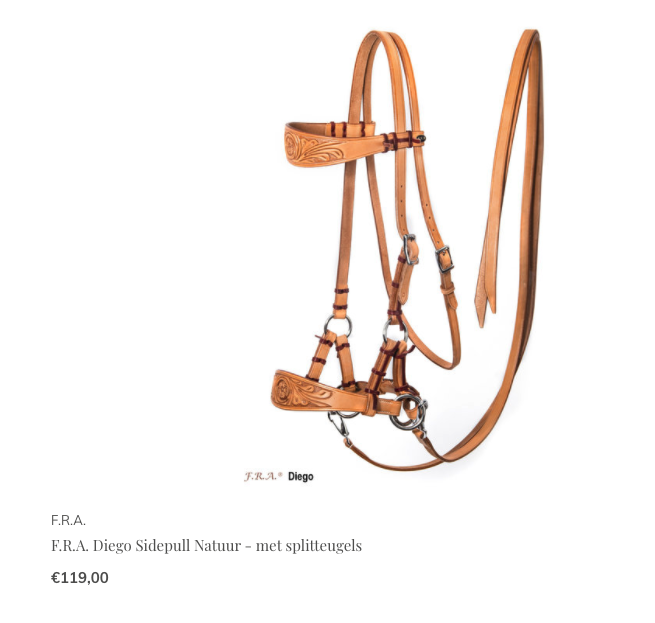
If you prefer a sidepull with a western look, you can go for the FROM Diego or the FRA Shango , both are sold including reins.
Related products


Rope halter
A rope halter works similarly in terms of pressure, except that the reins on a rope halter are attached to a single loop at the bottom of the noseband. The noseband of a rope halter should fit snugly around the nose, so that when the reins are pulled, the horse feels the correct pressure on its nose and cheek. If the noseband is too large or too loose, there is a risk of the halter's cheek pieces pulling into the horse's eye or sending unclear signals to the horse. Only a properly fitting rope halter can be ridden correctly bitless.
Both the Parelli Natural Horsemanship rope halter if it FRA Babia rope halter are available in a wide variety of sizes and colours: something for everyone!


Related products

Bridle
The to bridle We also classify them in this category, as they have the same effect as a sidepull or rope halter. Depending on where the reins or lead rope are attached, more or less pressure is applied to the nose and cheek. A cavesson is primarily used in gymnastic floorwork and long-line work.
4. Applying pressure to the nose and cheeks with a cross-over rein
With a chin-crossed noseband, the noseband ends on either side with a ring to which the cheekpieces are attached. The chin-crossed straps cross through the ring at the end of the noseband, passing behind the chin. This results in the chin-crossed bridle hanging slightly lower than with a chin-crossed bridle (see next point). The reins are attached to the ends of the cross straps.
The difference with a sidepull is that the release is slightly different: because the straps cross under the chin, the release is slightly slower and less direct than with a sidepull or bosal. This can be particularly useful for sensitive horses or young horses. Regularly lubricating your chin-crossed bitless bridle ensures that the release remains good and that the straps continue to slide smoothly over each other.
The FRA Lami and the FRA Janosch are two cross-over bridles in a classic design. If you prefer a Western-Spanish look, you can opt for the FRA Tinver . This one is sold with reins and is available in various colors.
Related products



5. Apply pressure to the nose and cheeks with crossed reins
The cross-over bitless bridle is better known as the Dr. Cook bridle. The noseband of this bridle has a ring on each side directly behind the cheekpieces, allowing a strap to cross over the jaws and the poll.
This type of bridle allows you to use rein pressure to send a signal to the horse's nose, neck, and jaw. This can be useful for horses that are relatively insensitive to bitless bridles, allowing you to work on multiple points. Cross-over bridles are ideal for bitless dressage and are very suitable for drivers who prefer to ride bitless.
As with the chin-crossed bridles, it is important to grease your bridle regularly to ensure optimal release and to keep it in good condition.
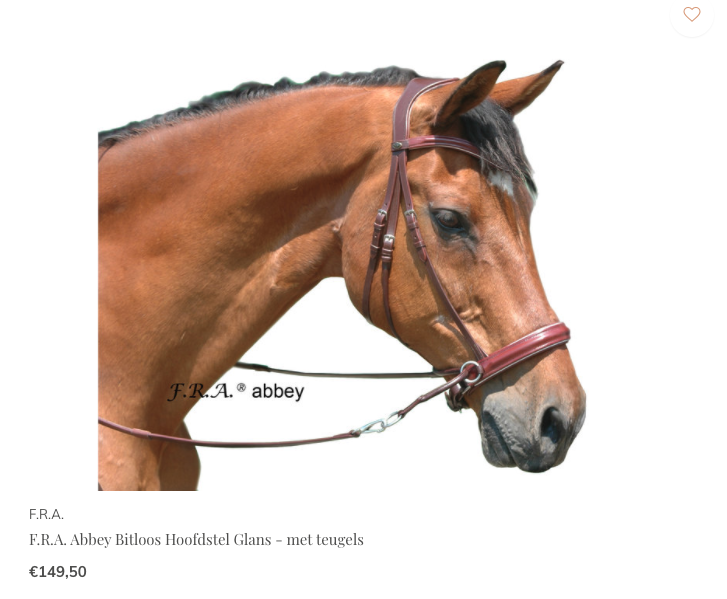
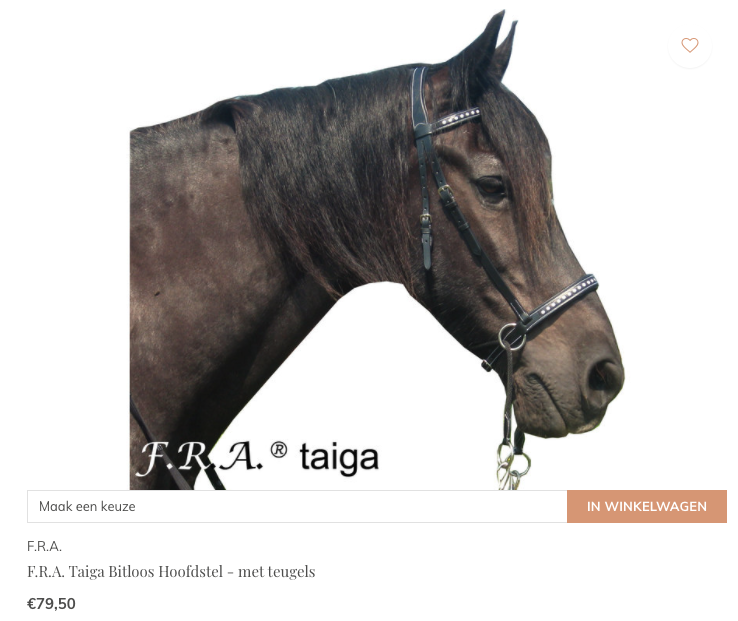
You will find various models of cross-over bridles, ranging from luxurious dressage versions with stones such as the FRA Taiga or the FRA Ulan , decorated with braiding on the noseband and browband. The FRA Dietsji has extra padding under the noseband, browband and behind the ears and the FRA Abbey is anatomically shaped with an extra patent finish on the nose and browband, available in black or brown. If you prefer to drive or ride your small pony bitless, you can opt for the FRA Palona , which is also available in Shetland Sheepdog or Mini Shetland Sheepdog size.
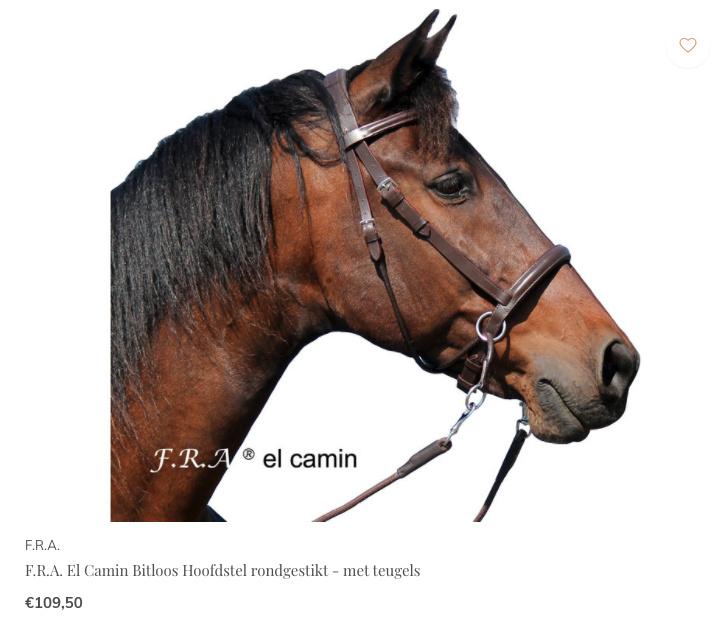
The From El Camin Finally, it is made with round stitched straps under the jaws, for optimal release and sliding through the rings at the noseband.
Related products



6. Effect on the nose, chin and behind the ears - the Hackamore
Finally, the hackamore is a special bitless bridle in this list: it uses leverage to act on the horse's nose, chin, and behind the ears. Because of the shanks, it's similar to a scissor bit, acting on the horse's mouth, nose, and behind the ears, but instead of acting on the mouth, the hackamore applies pressure to the nose.
The amount of pressure you can put on a hackamore depends on the shape and length of the shanks.
At a mechanical hackamore You can choose scissors in different lengths: the longer the scissors, the sharper you can work on your horse's nose and chin. The shorter the scissors, the gentler the hackamore. Examples of scissors here are: Justin (150mm), Love (100mm), Music (140mm) and Sting (160mm).
At a multi hackamore do you have scissors like the Star (85mm) or Rose (145mm), where you can attach the reins at different positions, so the amount of pressure can vary depending on which hole you attach the reins to. The Rose can also be used as a mechanical hackamore by attaching the reins to the bottom ring.
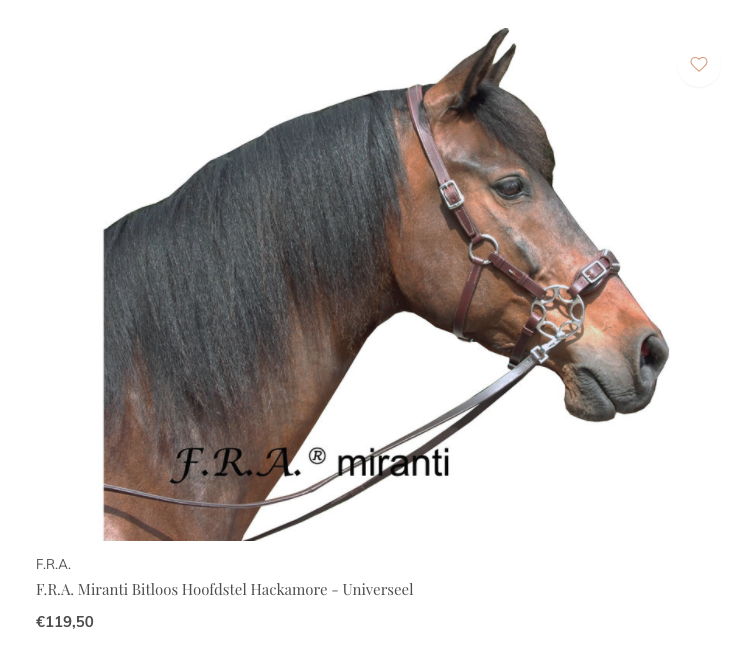
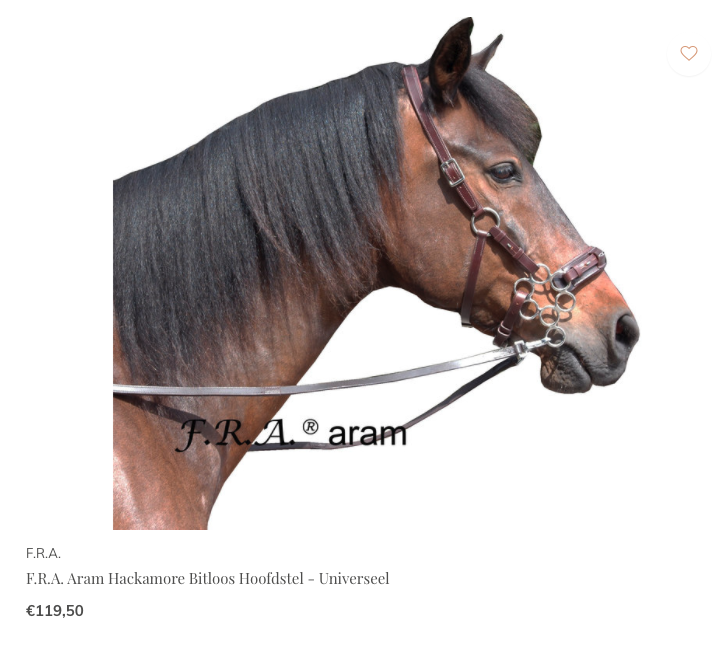
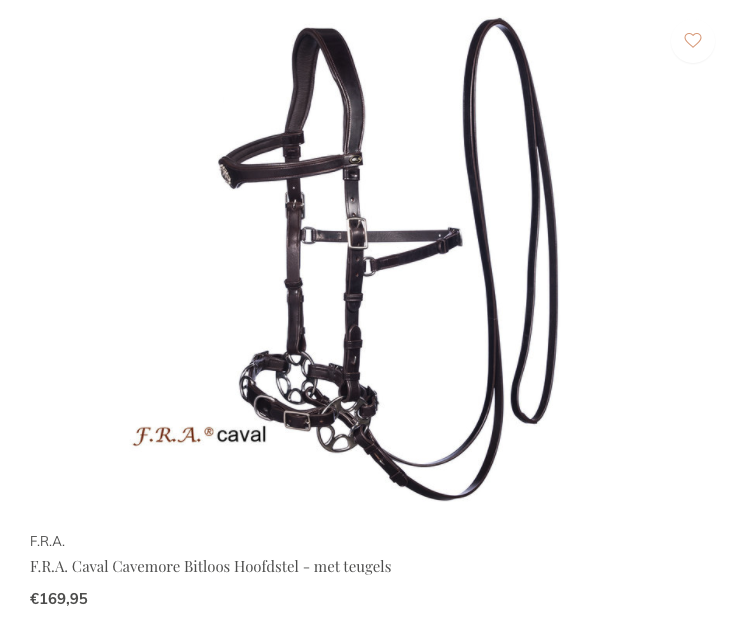
In the Aleashop we sell different types of hackamore bridles, with or without decoration on the noseband ( FRA Miranti or Aram ), anatomically shaped ( FRA Calli or BR Lydney ) or in ornate baroque design ( FRA Imperial ) available in black or brown. We also have the FRA Jasper hackamore of cord or a simple Parelli Natural Hackamore in many different colors, including reins. Finally, you can also find the FRA Caval Finding a cavemore: this is a combination of a hackamore and a caveçon, which, by means of the rings on the noseband, can also be used as a cavesson for gymnastic floor work.
Related products


Is your color or size not listed in our webshop?
Please feel free to send us an email or contact us, we can probably order what you want!


